Sommige communicatie is prachtig geschreven, zorgvuldig goedgekeurd en commercieel nutteloos.
Niets erin is overduidelijk fout. De boodschap is helder. Het ontwerp is sterk. Iedere belanghebbende kreeg de kans om het te verbeteren.
Het kwam simpelweg aan nadat de klant al had besloten, nadat de journalist het artikel al had ingeleverd, nadat het gesprek op het evenement alweer verder was of nadat de markt was afgehaakt.
Op het beslissende moment telt de communicatie die er ligt. De perfecte versie die nog in iemands reviewwachtrij staat, telt niet.
Goede communicatie is een geslaagde overdracht, de gewenste ontvangst en een bruikbare volgende stap. Kwaliteit is belangrijk, maar kwaliteit zonder aflevering, ontvangst of timing is onaf werk.
Communicatie is een effect, niet alleen een artefact
Teams beoordelen communicatie vaak door naar het artefact te kijken: de strategie, briefing, het artikel, de film, het persbericht, de presentatie of de website.
De ontvanger doorloopt een andere keten:
- de communicatie komt beschikbaar;
- het bereikt hen via een kanaal dat ze gebruiken;
- het verdient genoeg aandacht om opgemerkt te worden;
- ze interpreteren de bedoelde betekenis;
- ze geloven er voldoende van;
- ze weten wat de volgende stap is;
- en die volgende stap is nog mogelijk.
Eén zwakke schakel is genoeg om een goede boodschap krachteloos te maken.
Lasswells vijf vragen ontmaskeren nog altijd zwakke communicatie
Harold Lasswells invloedrijke formulering uit 1948 stelde: wie zegt wat, via welk kanaal, tegen wie, met welk effect?
Het model is simpel, lineair en onvolledig voor moderne, interactieve communicatie. Toch blijft het bruikbaar, omdat teams vaak vooral het 'wat' optimaliseren en 'kanaal', 'aan wie' en 'effect' vaag laten.
Een launchteam kan de aankondiging tot in de puntjes polijsten en toch geen antwoord hebben op:
- Wie is de meest geloofwaardige afzender?
- Welk deel van de boodschap is relevant voor elke ontvanger?
- Waar komt die persoon er realistisch gezien mee in aanraking?
- Welk waarneembaar effect moet er daarna volgen?
Als je die vragen niet kunt beantwoorden, maakt nog een redactieronde het communicatiesysteem niet compleet.
Shannon verklaart waarom gepubliceerd zijn niet hetzelfde is als ontvangen worden
Claude Shannons wiskundige communicatietheorie uit 1948 ging over betrouwbare informatieoverdracht, niet over marketingovertuiging. Zijn taal van bron, signaal, kanaal, ontvanger en ruis biedt nog steeds een waardevolle bril.
Zakelijke communicatie reist door ruis:
- concurrerende posts en krantenkoppen;
- een overvolle inbox;
- interne terminologie die de klant niet gebruikt;
- een zwakke voorbeeldafbeelding;
- een algoritme dat de boodschap maar aan een deel van het publiek toont;
- een trage pagina die het bewijs vertraagt;
- of een call-to-action die te veel, te snel vraagt.
Daarom is één keer versturen geen complete distributiestrategie. Belangrijke waarheid heeft vaak verantwoorde herhaling nodig: meerdere formats, geloofwaardige afzenders en goed gekozen kanalen die dezelfde kernboodschap herhalen, zonder zelf tot vervelende ruis te worden.
De Grieken hadden een woord voor het juiste moment
Kairos beschrijft het gunstige, passende moment. Dat is iets anders dan simpelweg de tijd meten. Het gaat om de vraag of dít het moment is waarop een boodschap beweging kan creëren.
Onderzoek naar kairos in retorica beschrijft juiste timing en de juiste maat als wezenlijk onderdeel van overtuigende actie. Recenter mediaonderzoek stelt dat algoritmische platforms om hun eigen vorm van 'het juiste moment' draaien en bepalen welke content zichtbaar wordt in snel veranderende feeds. Zie The Right-Time Web.
In de journalistiek is dit extra zichtbaar. Onderzoek naar meer dan een eeuw aan journalistieke handboeken laat zien dat actualiteit een van de terugkerende nieuwswaarden is gebleven, naast impact, nabijheid, bekendheid en andere contextafhankelijke factoren. Een waar verhaal kan volgende week nog steeds minder nieuwswaardig zijn, simpelweg omdat het aandachtsvenster inmiddels gesloten is.
GRAVAA creëerde het moment niet. Wij waren er klaar voor.
GRAVAA ontwikkelde een aanpasbaar bandenspanningssysteem dat renners tijdens het fietsen konden bijstellen. Het product was technisch interessant. Technische interesse alleen garandeerde geen brede aandacht.
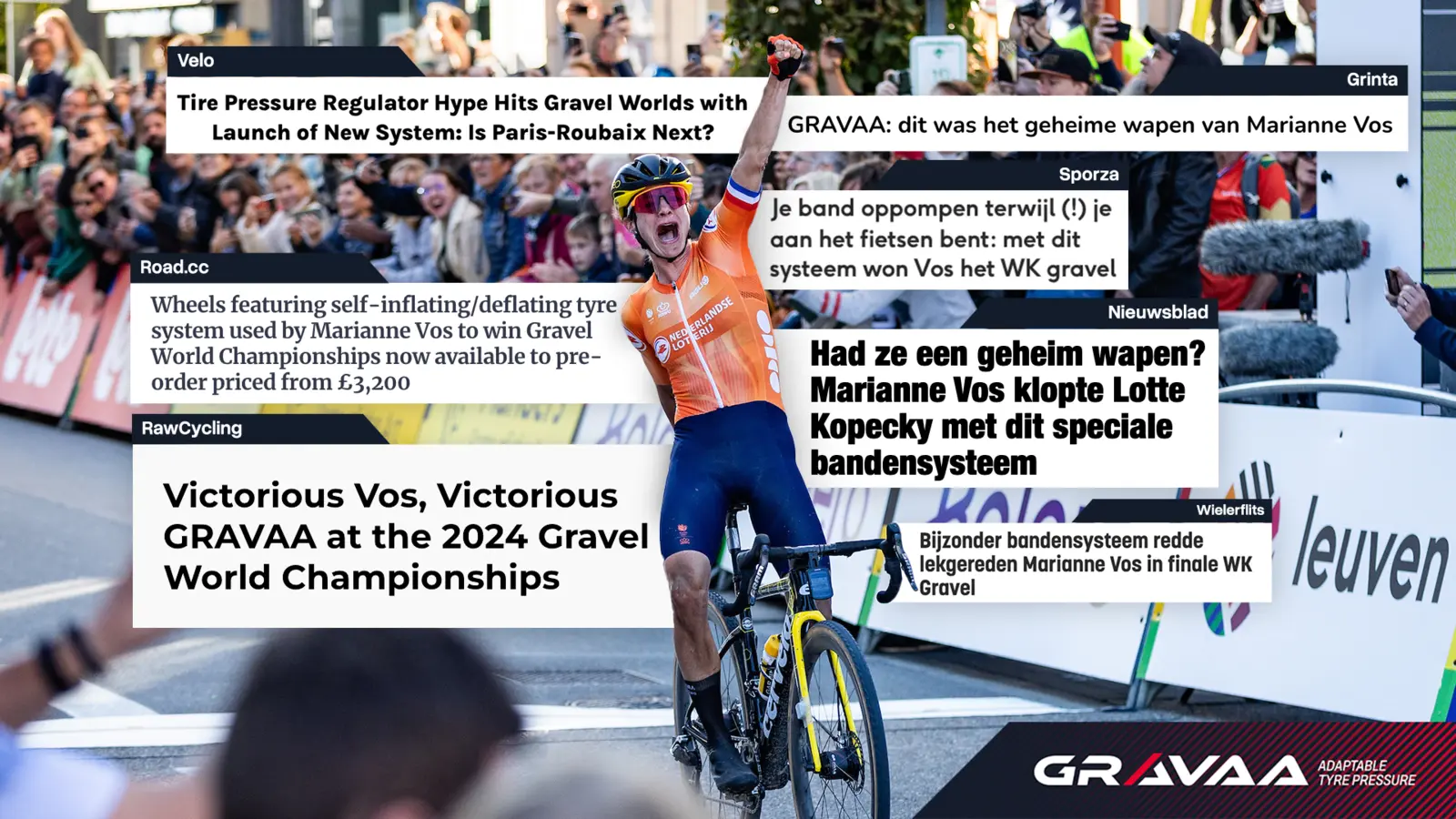
Toen Marianne Vos in 2024 met deze technologie het WK Gravel won, had de markt al aandacht voor de race, de winnaar en de vraag naar concurrentievoordeel. Het bewijs, de gerespecteerde atleet en het publieke moment kwamen samen.
Onze communicatie kon het resultaat direct koppelen aan een begrijpelijk productverhaal, precies op het moment dat journalisten, renners, partners en investeerders actief vroegen wat er was gebeurd.
De earned aandacht die daaruit voortkwam, droeg bij aan meer dan 60 miljoen impressies, internationale berichtgeving, een verdrievoudigd social publiek en duizenden nieuwe subscribers, zonder advertentiebudget. Lees de volledige GRAVAA-case.
De communicatie had nog steeds kloppende feiten, foto's, productuitleg, mediarelaties en een bruikbare bestemming voor de aandacht nodig. Maar een versie die drie weken later was opgeleverd, had niet dezelfde waarde gehad, ook al was iedere zin verbeterd.
Perfecte timing redt geen zwakke of onware communicatie. Het vermenigvuldigt communicatie die geloofwaardig, voorbereid en beschikbaar is op het moment dat de ontvanger al een reden heeft om aandacht te geven.
Gepubliceerd wint van perfect onder vier voorwaarden
'Gewoon publiceren' is geen verantwoorde universele regel. De beschikbare versie publiceren is de betere keuze wanneer aan vier voorwaarden is voldaan.
- De kernclaim klopt. De feiten, namen, cijfers en implicaties zijn verdedigbaar.
- De nadelen zijn onder controle. De boodschap creëert geen onacceptabel juridisch, veiligheids-, privacy- of reputatierisico.
- De volgende stap werkt. Een lezer kan het bewijs vinden, informatie aanvragen, zich inschrijven, kopen of de juiste persoon bereiken.
- Het aandachtsvenster staat nu open. Uitstel vermindert relevantie, toegang of de kans op ontvangst.
Ontbreken deze voorwaarden, dan wordt snelheid roekeloosheid. Medisch advies, financiële claims, crisisverklaringen, contracten en onomkeerbare beschuldigingen vragen om een ander niveau van controle.
Het doel is niet lagere standaarden. Het doel is een beter onderscheid tussen verbeteringen die de waarheid beschermen en verbeteringen die een team alleen maar een geruster gevoel geven.
Bouw paraatheid vóórdat het moment aanbreekt
De makkelijkste manier om snel te communiceren, is voorkomen dat je tijdens de kans alles vanaf nul moet opbouwen.
Bouw een paraatheidslaag:
- een actuele fact sheet en goedgekeurde productuitleg;
- hoogwaardige foto's in bruikbare web- en persformaten;
- korte biografieën en citeerbare standpunten van de oprichter;
- klantbewijs met toestemming om te publiceren;
- een lijst met relevante journalisten, creators, partners en klanten;
- landingspagina's en call-to-actions die al werken;
- duidelijke regels over wat goedkeuring nodig heeft en wie die mag geven.
Daarom is bij de launch is het te laat om te beginnen met bewijs opbouwen. Voorbereiding beschermt kwaliteit en timing tegelijk.
Gebruik een publicatiesysteem met drie snelheden
Snelheid 1: communicatie op het moment zelf
Publiceer binnen enkele uren, terwijl de aandacht er nog is. Gebruik geverifieerde feiten, één heldere boodschap, een relevant beeld en één bruikbare volgende stap. Verbeter of breid later uit.
Snelheid 2: nuttige opvolging
Publiceer binnen enkele dagen. Voeg duiding toe, gevolgen voor klanten, achtergrondcontext en antwoorden op de vragen die de eerste communicatie opriep.
Snelheid 3: blijvend naslagwerk
Publiceer de duurzame case study, handleiding of zoekgericht artikel. Deze versie mag dieper gaan, beter onderbouwd zijn en zo zijn opgezet dat hij bruikbaar blijft nadat de directe aandacht is weggeëbd.
De drie snelheden voorkomen een vals dilemma tussen snel en goed. De eerste vangt het moment. De tweede voedt het gesprek. De derde bouwt een herbruikbaar bedrijfsmiddel.
Bereik is kansafhankelijk, dus ontwerp voor meer dan één kans
Zelfs sterke communicatie bereikt soms minder van de beoogde ontvangers dan je had gehoopt. Social feeds verspreiden ongelijk. Journalisten hebben beperkte ruimte. Klanten missen e-mails. Zichtbaarheid in zoekmachines groeit langzaam. Mensen hebben het druk.
Interpreteer één zwak verspreidingsresultaat niet als bewijs dat de boodschap geen waarde heeft. Verpak de kernwaarheid slim opnieuw:
- een post van de oprichter die de afweging toelicht;
- een klant-e-mail gericht op relevantie;
- een mediapitch gericht op maatschappelijk belang;
- een korte video die het bewijs laat zien;
- een vindbaar artikel dat beschikbaar blijft;
- een salesmiddel dat je inzet zodra de vraag vanzelf opkomt.
Efficiëntie is niet één keer publiceren. Efficiëntie is één waarachtige bron bouwen van waaruit je meerdere, goed geplaatste overdrachten kunt doen.
Beoordeel communicatie op ontvangst en beweging
Kijk na publicatie verder dan outputcijfers. Stel jezelf de vraag:
- Heeft de beoogde ontvanger het gezien?
- Wat hebben ze begrepen of doorverteld?
- Creëerden beeld en woordkeuze het beoogde frame?
- Welke vragen of bezwaren bleven over?
- Welke bruikbare volgende actie volgde?
- Was de timing vroeg genoeg om de beslissing te beïnvloeden?
De antwoorden verbeteren de volgende overdracht. Communicatie wordt zo een lerend systeem in plaats van een reeks afgeronde producties.
Het beslissende moment kent geen reviewwachtrij
Communicatie verdient vakmanschap. Het verdient ook een deadline die verbonden is met de werkelijkheid.
Bij goede timing kan gepubliceerde communicatie beter presteren dan communicatie die pas perfect is nadat de reden om erom te geven is verdwenen. Bij uitzonderlijke timing wordt beschikbaarheid onderdeel van de kwaliteit.
Bereid de waarheid voor. Begrijp de ontvanger. Kies het kanaal. Verminder de ruis. Zorg dat de volgende stap werkt. Publiceer dan, terwijl het moment de boodschap nog kan dragen.
Maak de waardevolle waarheid makkelijker te ontvangen
Breng ontvanger, boodschap, visueel bewijs, timing, kanaal en volgende stap samen in communicatie die reist en verkoopt.
Plan een Outside-In gesprek